


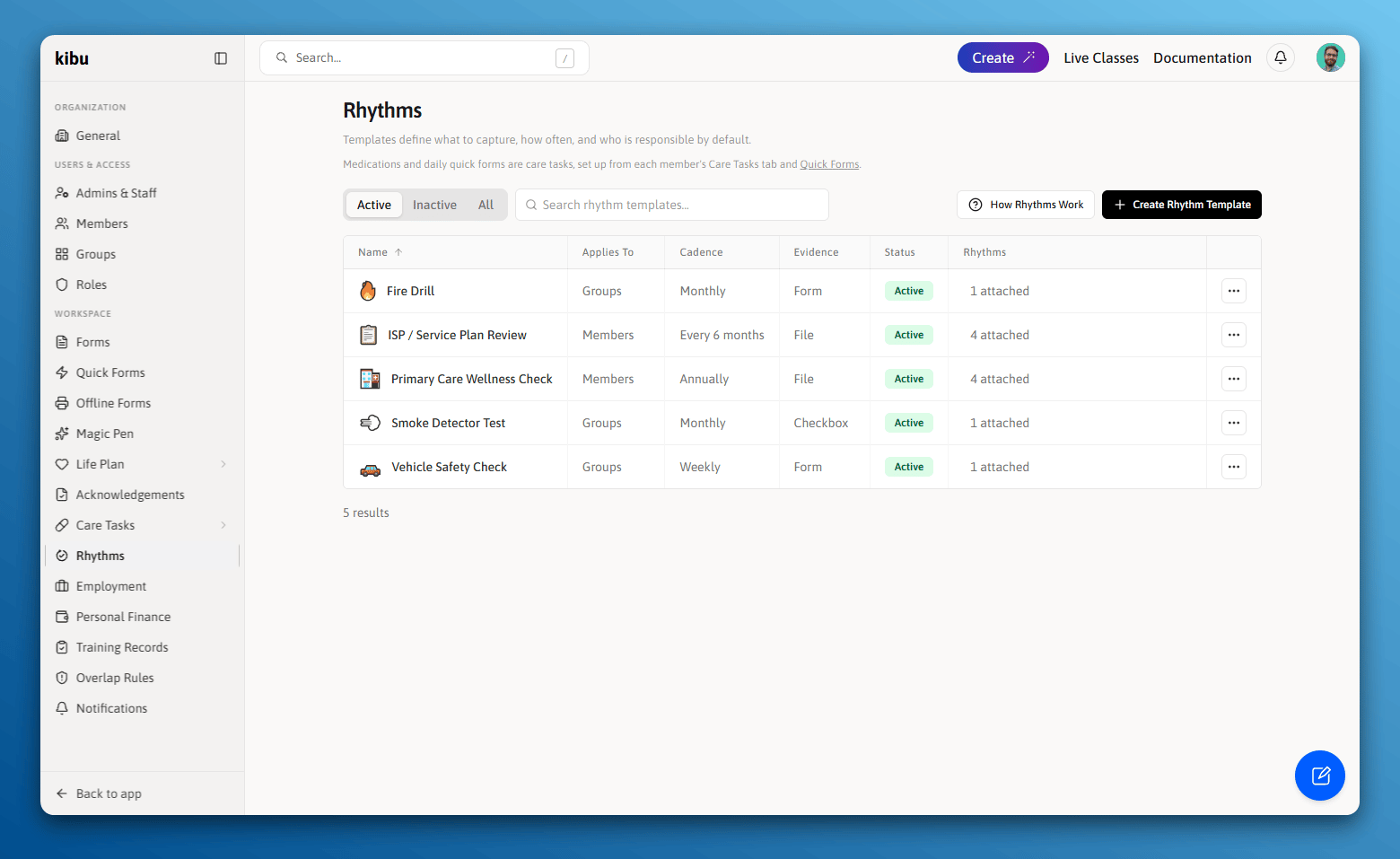
Settings > Rhythms, where every template in your organization is defined.
Build a Template
Select Create Rhythm Template. The builder has four sections, and a live preview beside it shows the rhythm exactly as staff will see it.
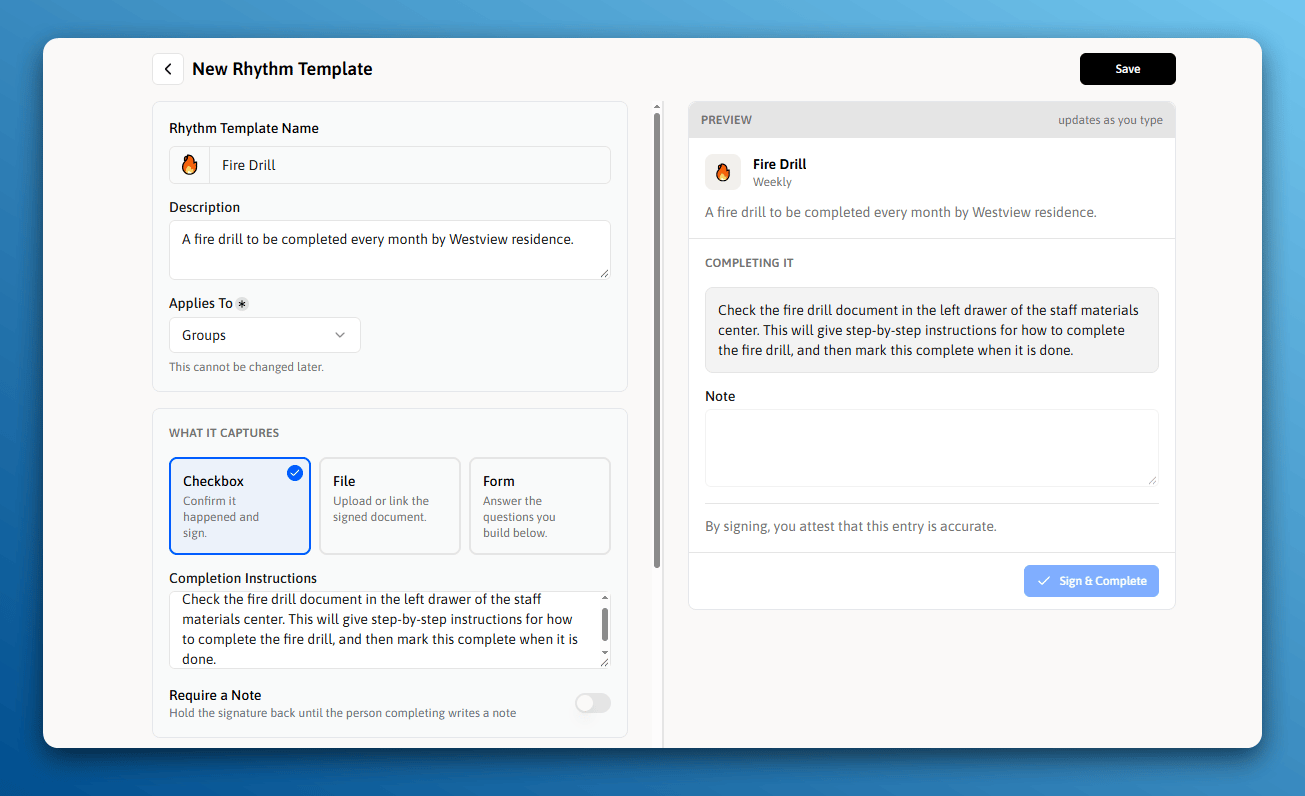
The template builder, with the live preview on the right.
1
Name it and choose who it applies to
Give the template a name, an icon, and a short description. Then choose Members or Groups.Use Groups for anything that belongs to a house, a vehicle, or a program. Use Members for anything that belongs to one person.
2
Choose how the record is captured
Under What it captures, pick one of the three evidence types below.Completion Instructions appear at the moment staff complete the item. Use them for “check the fluid levels before signing” or “upload the signed copy from the practice.”Require a Note holds the signature back until the person completing writes one.
3
Set the schedule
Under When it comes due, pick a Cadence, then answer “When is the first one due?” The next three real dates appear underneath, so you can confirm the pattern before saving.Set the Completion Window and Reminders here too. Both are covered below.
4
Choose who is involved
Default assigned is who owns the item. Default subscribers are notified when it is completed or missed.Both are starting points that whoever attaches the template can change.
How the Record Is Captured
Checkbox
Confirm it happened and sign. Best for a smoke detector test or a weekly temperature check.
File
Upload or link the signed document. Best for an ISP review or a visit summary.
Form
Answer the questions you build below. Best for a fire drill or a vehicle inspection.
Cadence
Daily and Certain days of the week are available on group templates only. Daily documentation for one person belongs in Care Tasks.
The completion window
The completion window is how many days before the due date staff can sign the item off. A 60 day window on an annual review means it opens two months early. The window never closes. A late item stays completable, because a missed fire drill still has to be recorded once it happens.Items that come due more often than once a week always open on the due date itself, whatever window you set. A daily check signed a day early is not evidence of anything.
Reminders
Reminders go to the people assigned to an item, counted back from its due date. An annual review might remind at 90, 60, and 30 days out. If a rhythm has nobody assigned, its reminders go to the subscribers instead.Attach the Template
A template does nothing until you attach it. Kibu offers to do this as soon as you save a new one, and you can attach at any time afterwards.1
Open the member or group
Go to their Rhythms tab and select Add Rhythm. Add Rhythm on the main Rhythms page works too.
2
Pick the template
Only templates built for that type appear. A member will not be offered a group template.
3
Set the first due date
Kibu proposes the next date that fits the template’s schedule. Change it if this member or group is on a different cycle. Everything after it counts from this date.
4
Confirm who is assigned
The template’s defaults are filled in, and you can change them here. Leaving the list empty is allowed, and the item then reads Anyone may complete it.
Editing a Template Later
Editing a template updates every rhythm attached to it, and Kibu tells you what the change will do before you save. Records already signed keep the questions they were answered against, so history never changes retroactively.Pausing a template stops new items from being created. Anything already open stays open and stays completable.
Next Steps
Completing and Tracking Rhythms
Complete items on web and mobile, review history, and export your record.
Rhythms Overview
What Rhythms are, and when to use one instead of a Care Task.